


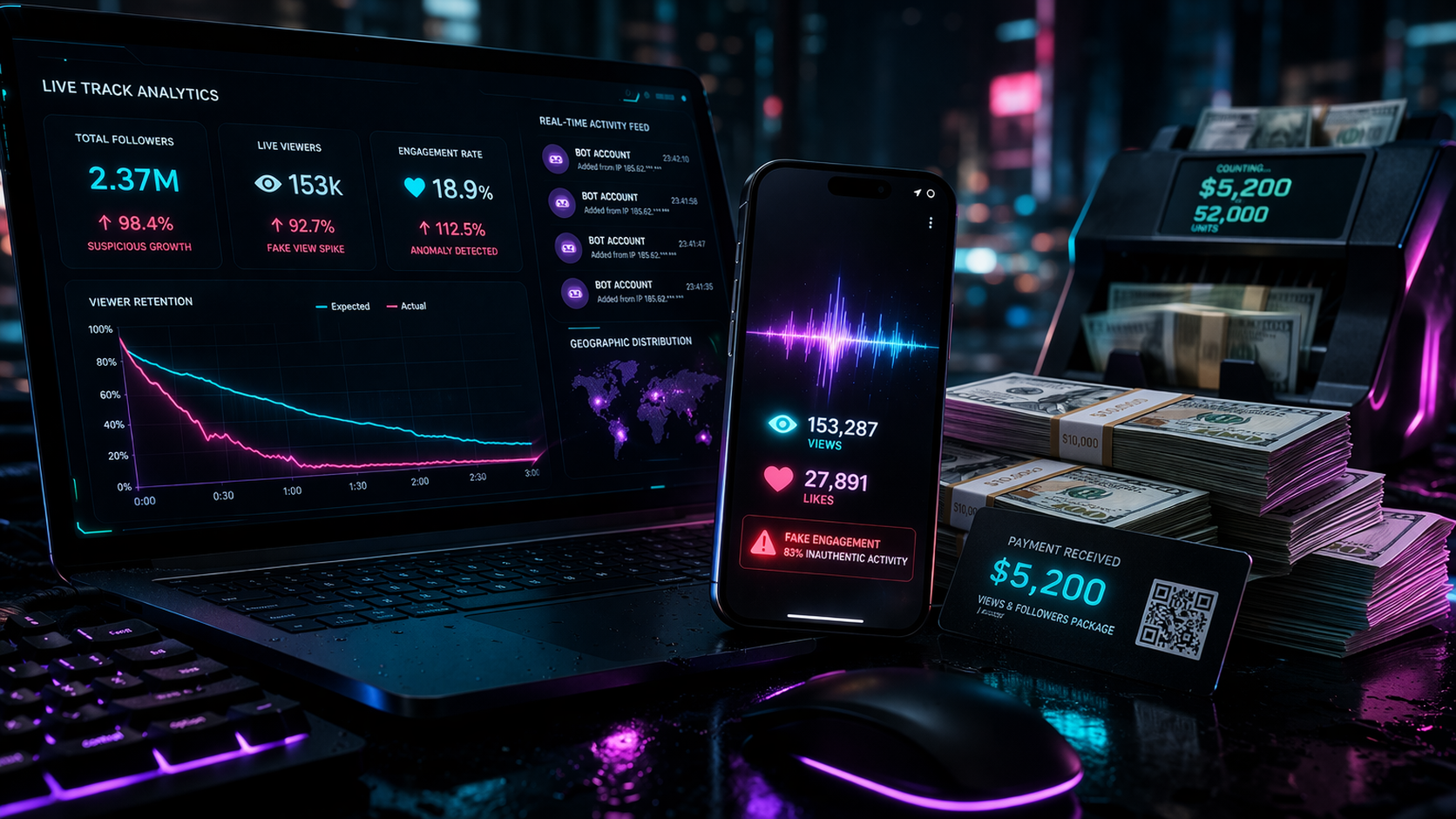
Growing significantly and rapidly in streaming subscriptions driven by digital music adoption in Thailand leads not only to a highly competitive market between both those international giants (e.g., JOOX, Spotify, YouTube Music, Apple Music) and localized, user-centric platforms (e.g., Plern) but also to an increase in harmful consequences of streaming fraud.
Such fraud, also known as “Fake Steams” or “Fraudulent Streams”, involves using bots, click farms, and AI-generated content to create fake streaming numbers. This seems to cause financial and reputational harm to the Thai music industry nowadays and the current laws and regulations are unable to cope with this problem effectively.
A. EXAMPLES OF DIFFERENT TYPES OF “STREAMING FRAUD”
-
-
BOTS
-
… an automated looping program to stream specific tracks repeatedly designed to artificially inflate the play count of songs, videos, or podcasts on digital platforms to generate fake engagement, making such specific tracks appear more popular than they genuinely are.
-
-
CLICK FARMS
-
… a use of low-paid workers or automated scripts to generate fraudulent traffic, likes, followers, and clicks on digital platforms selling engagement in bulk, boosting metrics for popularity or ad revenue.
-
-
AI-GENERATED CONTENT
-
… a use of AI to create thousands of fake songs and then use bots to stream or upload – flooding over digital platforms to manipulate popularity metrics and steal royalties.
B. KEY PROBLEMS CAUSED BY “STREAMING FRAUD”
-
-
Harm to “Platforms”: Data Distortion and Algorithm Manipulation
-
“Fake Steams” or “Fraudulent Streams” distort analytics, making it difficult for streaming platforms (such as JOOX, Spotify, YouTube Music, Apple Music, Plern) to determine true popularity, which skews recommendation algorithms and playlisting. This results in fake content being recommended to users, reducing overall user satisfaction and platform credibility and Integrity.
-
-
Harm to “Artists”: Financial Loss and Royalty Misallocation
-
Since most platforms use a “pro-rata” payout model (pooling all revenue and distributing based on share of total streams), “Fake Steams” or “Fraudulent Streams” act as theft, siphoning money/royalties from legitimate artists and reducing their payouts.
Even worse, platforms like Spotify have begun fining, withholding royalties, removing music from playlists, or permanently banning the artist if “Fake Steams” or “Fraudulent Streams” are suspiciously detected. This “guilty until proven innocent” approach creates burden of proof to those innocent artists.
C. CURRENT LEGAL FRAMEWORK
Thai law does not expressly regulate streaming fraud, and it is unaware of any reported judicial precedents directly addressing this issue. However, general legal principles relating to fraud, money laundering, and computer-related offences may be applicable, depending on the factual circumstances of each case.
-
-
Thai Criminal Code B.E. 2499 (1956) – Section 341 (Fraud)
-
Streaming fraud typically involves the intentional creation or use of false or misleading data to represent artificial popularity, consumption, or user engagement as genuine, with the purpose of deceiving digital platforms, advertisers, or other commercial counterparties into making payments, allocating royalties, or conferring commercial benefits that would not otherwise arise.
Such conduct may constitute an act of dishonestly deceiving another person by the assertion of a falsehood and, by such deception, obtaining property from the person so deceived or from a third person. Accordingly, streaming fraud is capable of constituting fraud under the Thai Criminal Code, subject to the facts and evidence of each case.
-
-
Anti-Money Laundering Act B.E. 2542 (1999) – Section 5 (Money Laundering)
-
Under the Anti-Money Laundering Act, offences relating to fraud constitute predicate offences for money laundering. Where income or benefits are derived from fraudulent streaming activities, any subsequent act of possessing, receiving, transferring, converting, concealing, or utilising such assets may amount to money laundering.
This liability extends beyond the original perpetrator to include any individual or entity that performs the aforementioned acts knowing that such assets are derived from unlawful activity. Consequently, revenue generated from manipulated streaming figures may expose offenders and related parties to money laundering liability, in addition to the fraud offence.
-
-
Computer Crime Act B.E. 2550 (2007) – Section 14
-
The Computer Crime Act prohibits the input into a computer system of forged computer data, whether in whole or in part, or false computer data, in a manner likely to cause damage to a third party or the public.
Fundamentally, the legislative intent of this provision is to address conduct such as the falsification of computer files to invade or damage computer systems, or the creation of fraudulent websites for the purpose of unlawfully obtaining property (for example, phishing). There are no judicial precedents applying this provision specifically to streaming fraud —where the offender typically does not “breach” security protocols or create fraudulent platforms but rather utilises legitimate access points to feed the system false data.
However, as streaming fraud involves the deliberate input of false data (such as artificially generated streams or plays) with deceptive intent to obtain commercial benefits from digital platforms or advertisers, such conduct may, depending on the factual circumstances, fall within the scope of the Computer Crime Act and give rise to criminal liability.
D. LIABILITIES AND REMEDIES
-
-
CIVIL REMEDIES
-
Persons who have suffered damage as a result of fraud are entitled to claim civil damages pursuant to Section 420 of the Thai Civil and Commercial Code, which provides that any person who wilfully or negligently causes injury to another is liable to compensate the injured party for such damage.
Under Thai jurisprudence, Civil damages may include, as applicable:
-
-
- the value of property or money obtained through fraud;
- interest accrued on such sums;
- loss of financial opportunity, including lost royalties, revenue, or other economic benefits that would have been received but for the fraudulent conduct;
- non-pecuniary damages, including mental distress, emotional suffering, stress, or anxiety; and
- damage to reputation or professional standing.
-
-
-
CRIMINAL LIABILITIES
-
Fraud – Section 341, Thai Criminal Code
-
-
- Imprisonment for a term not exceeding three (3) years, and/or
- A fine not exceeding THB 60,000.
-
Computer Crime – Section 14, Computer Crime Act B.E. 2550 (2007)
-
-
- Imprisonment for a term not exceeding five (5) years, and/or
- A fine not exceeding THB 100,000.
-
Money Laundering – Section 5, Anti-Money Laundering Act B.E. 2542 (1999)
-
-
- Imprisonment ranging from one (1) to ten (10) years, and
- A fine ranging from THB 20,000 to THB 200,000, or both.
-
E. CONCLUSION
It obvious that this issue is part of a broader and global challenge and Thailand so far has no specific key laws to combat streaming fraud. While Thai courts may have to apply existing anti-fraud and IP laws to such digital landscape, those streaming platforms will have to implement stricter and stronger measures to combat illegal, high-volume streaming that diverts revenue from legitimate artists.
For more information, please contact us at mail@weintellectual.com.
The Authors